Tenerife is the closest thing to Hawaii I have found in Europe, and it is warm enough for the beach all year.
My wife, my father-in-law and I spent a week on the island in February 2024, splitting our days between the Teno mountains in the west, the Anaga mountains in the northeast and Mount Teide in the middle.
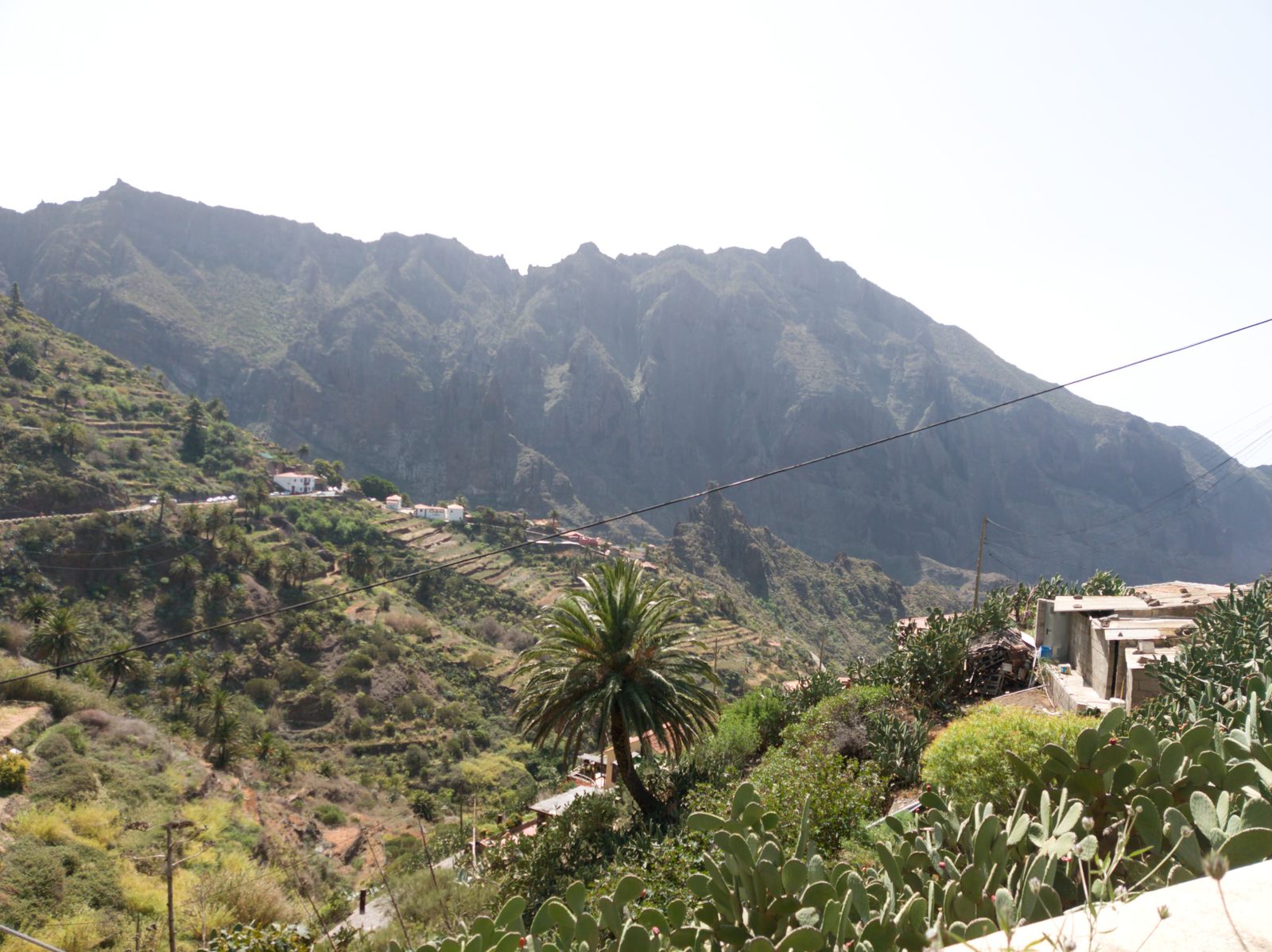
The view from our villa in the Teno mountains, about 12:20 pm.
In short: Kris Hehl is a travel designer based in North Vancouver, British Columbia, licensed by Consumer Protection BC (CPBC #65932). He has travelled to more than 50 countries, explored Tenerife with his wife and father-in-law, and plans winter-sun and adventure trips for couples and families.
When I first moved to Europe, I thought Greece, Sicily or southern Spain would give me warm weather in winter. Boy, was I wrong. Tenerife is one of the only places in Europe where a sun holiday works in any month.
Every day of our week was in the mid 20s with full sun, and the sea was in the high teens, warm enough to swim. The long-term official average high in Santa Cruz in February is about 21°C, and the sea stays near 19°C.
The Teno Mountains and Masca
A few minutes later I turned toward the valley. The hamlet of Masca sits below, at the top of the Masca gorge trail.
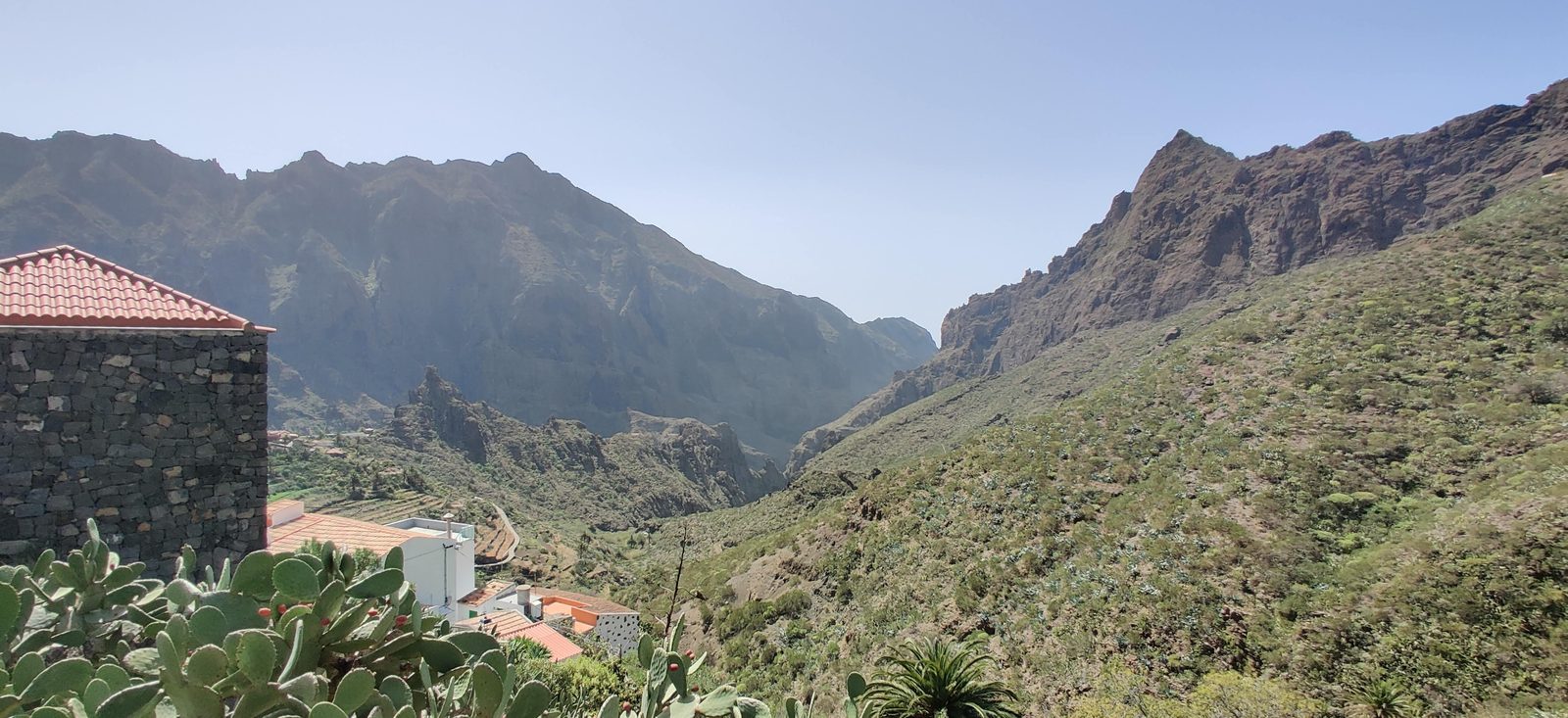
The Masca valley from our villa, about 12:25 pm.
Parking in Masca village is capped at two hours between 8 am and 2 pm, so the bus is easier (as of October 2026, check before you go).
With teens, the gorge hike is worth planning around. It needs an advance booking, costs about 41 euros per non-resident adult, and children under eight are not allowed (as of October 2026, check before you go).
About half an hour later we were out on a ridge above the valleys.
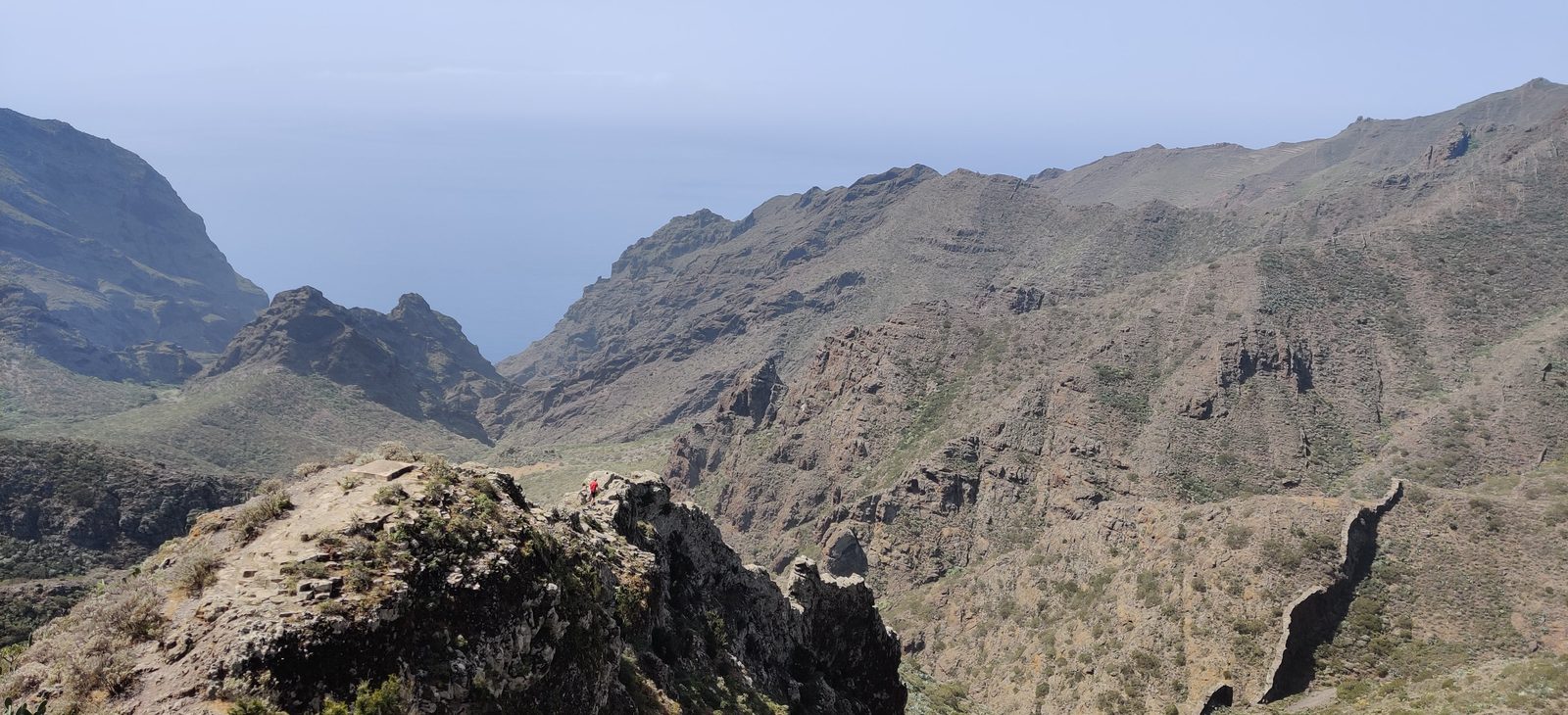
Look closely: that is me on the ridge, just before 1 pm.
This is the Hawaii side of Tenerife: sharp volcanic ridges, deep ravines and the Atlantic at the end of every valley.
In the afternoon, at about 2:20 pm, we found a natural whirlpool in the lava rock on the coast.
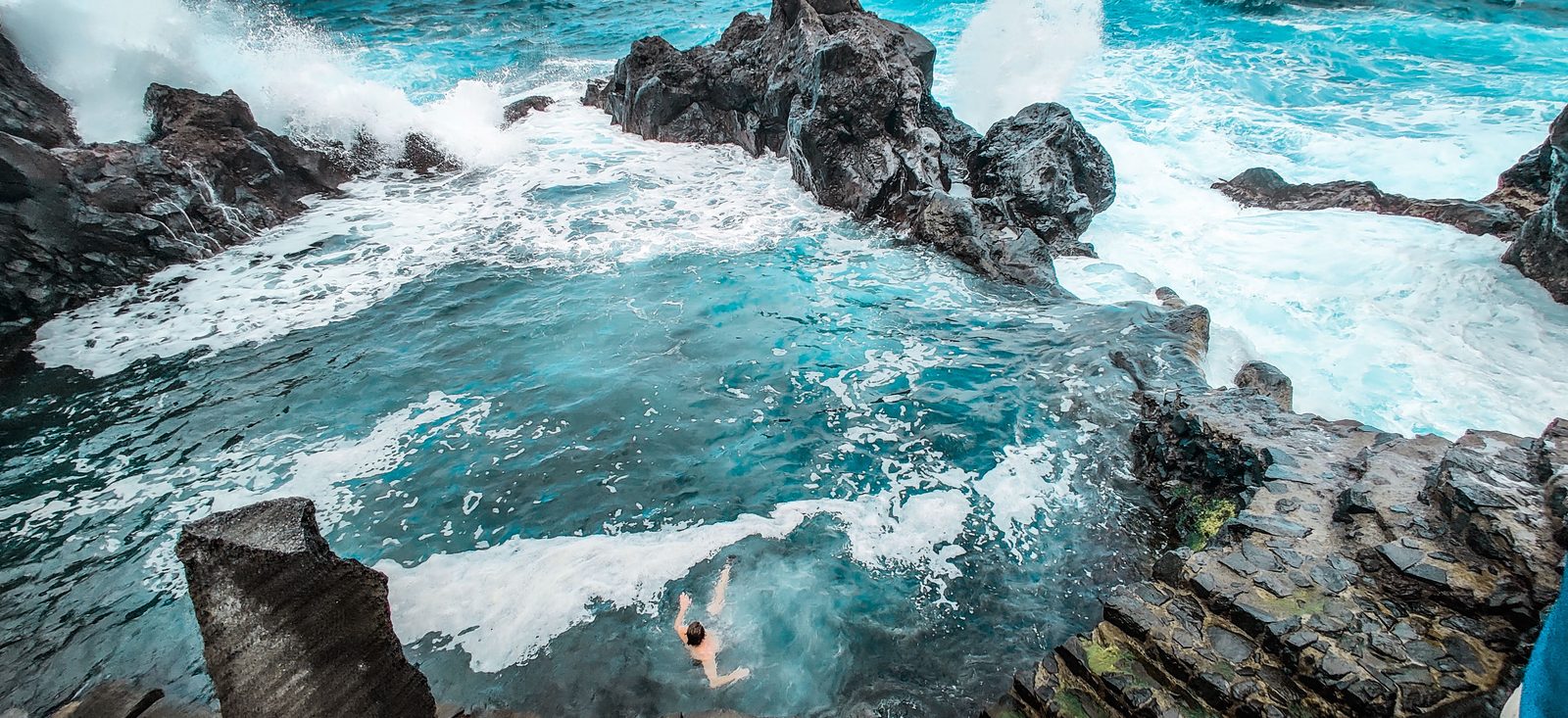
A natural whirlpool in the lava rock, about 2:20 pm. Only get in when the sea is calm.
La Graciosa became the eighth inhabited Canary Island in 2018. Tenerife is the largest and the most populous.
The islands sit off the northwest coast of Africa, but they are fully part of Spain. The food and culture were amazing all week, and the island felt far less busy than a winter week down south in North America.
The Anaga Mountains
On day two we drove to the far northeast of the island. By 11 am we were walking through the laurel forest in Anaga Rural Park.
The road here runs between walls of rock, with the trees closing in overhead.
It felt like walking through a jungle.
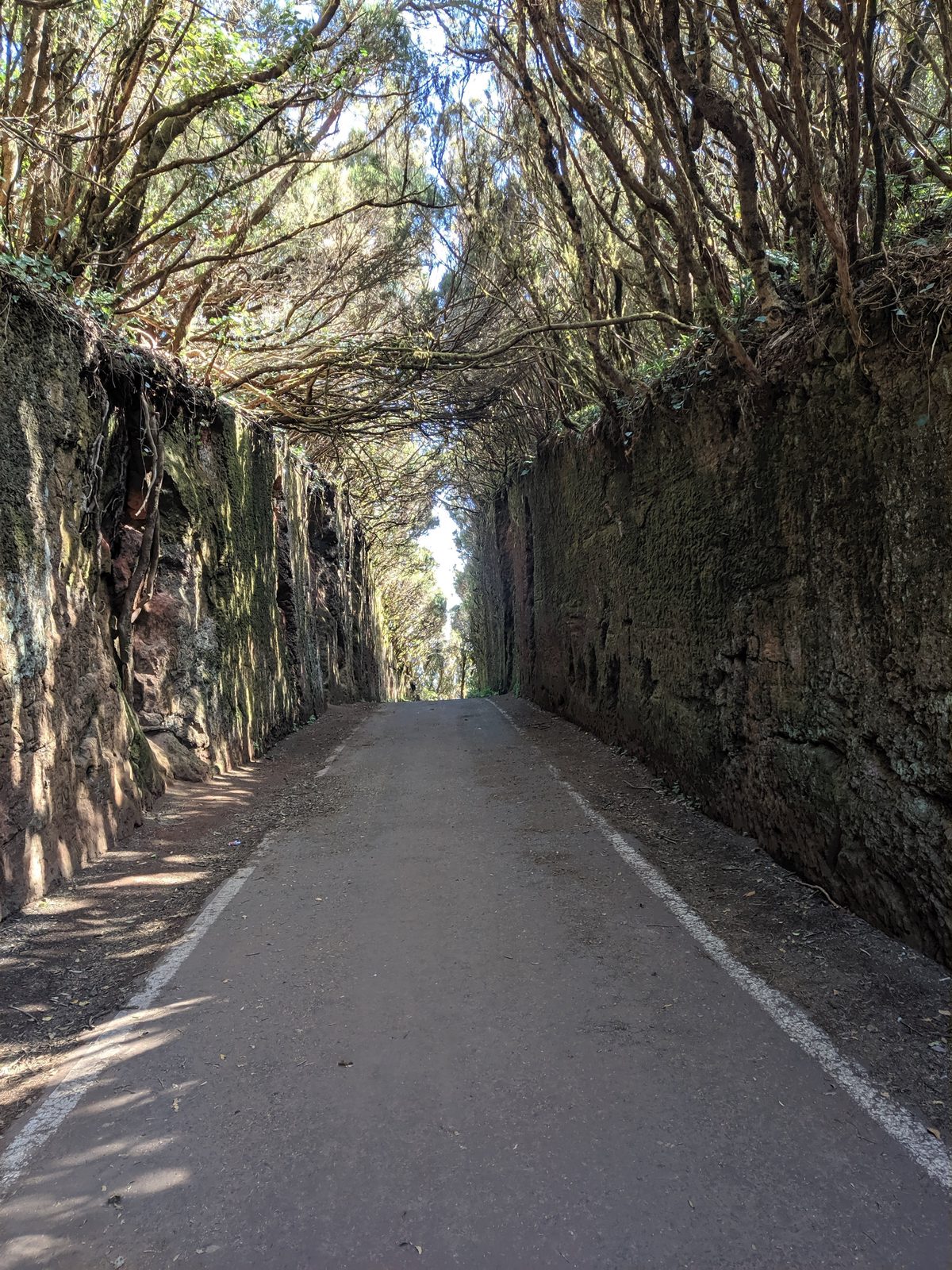
A road cut through the laurel forest in Anaga, about 11 am.
Anaga’s laurel forest is a living relic of the Tertiary period, kept alive by trade-wind mist.
Five minutes later the trees opened onto the ridges. Green peaks, terraced valleys and cloud sitting on the sea: this is the view I still compare to Hawaii.
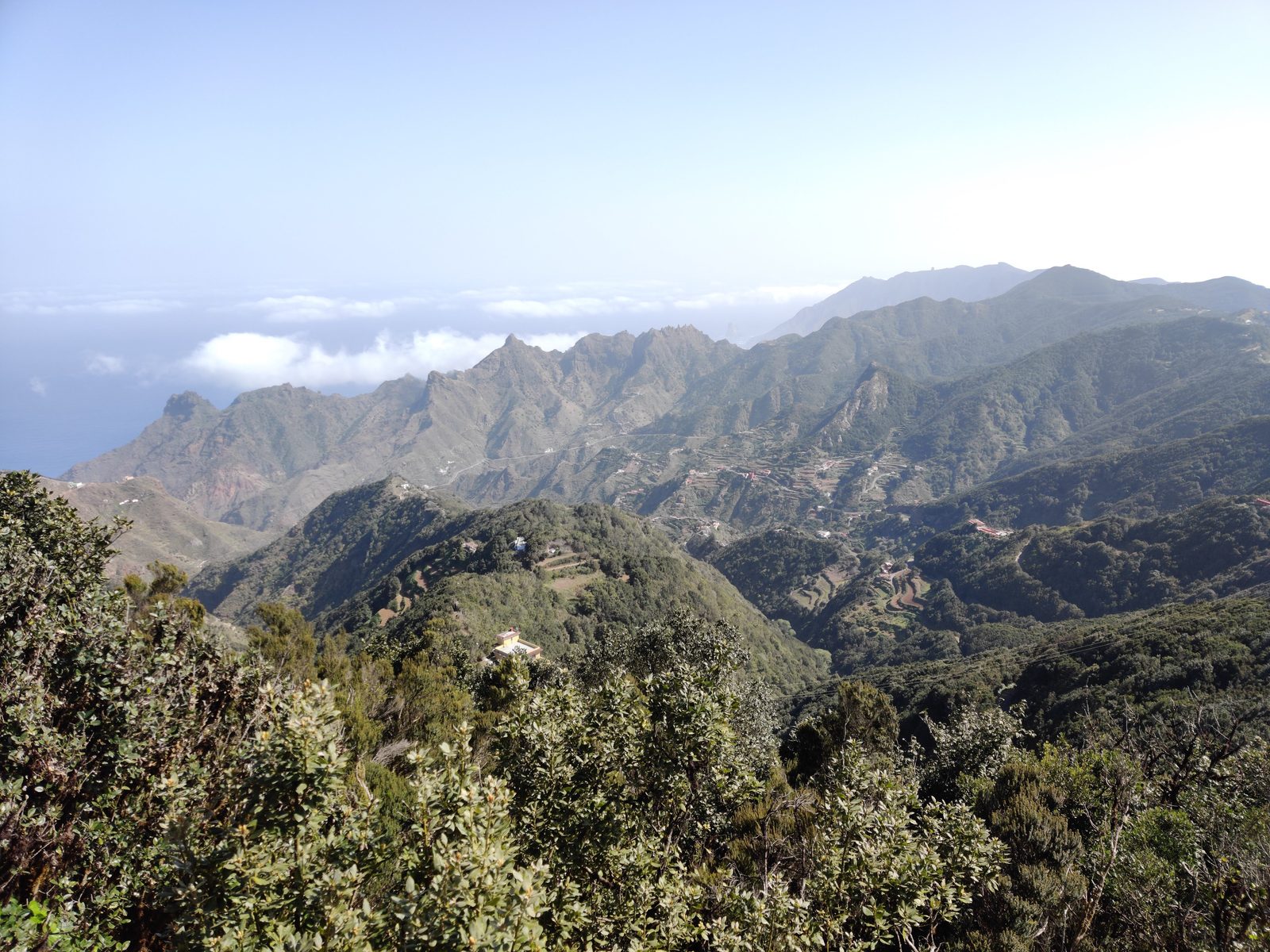
The Anaga ridges, about 11:05 am. The most Hawaii-like view of the trip.
Anaga is one of the oldest parts of Tenerife. UNESCO named the massif a biosphere reserve in 2015, and the island council says it has more endemic species than anywhere else in Europe.
By about 11:30 am we reached the coast, where the land drops straight into the Atlantic.
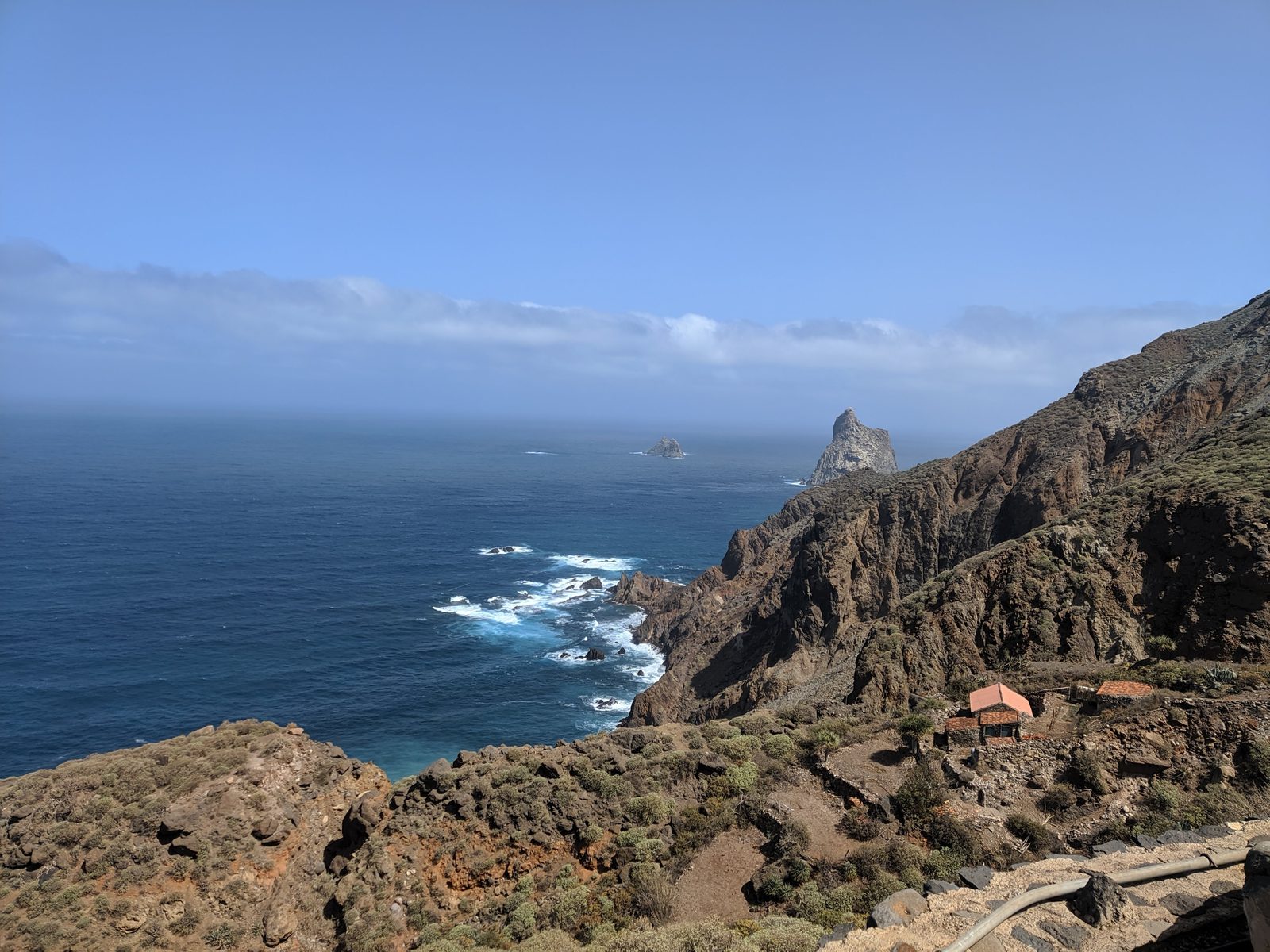
The Roques de Anaga off the northeast tip, about 11:30 am.
Roque de Fuera, the outer rock, holds the only known population of its own giant lizard subspecies.
Both rocks are a strict nature reserve, open only for research, so the view from the coast is as close as anyone gets.
The coast road was the drive of the trip. Twenty minutes later we were on it, with the cliffs on one side and the sea on the other.
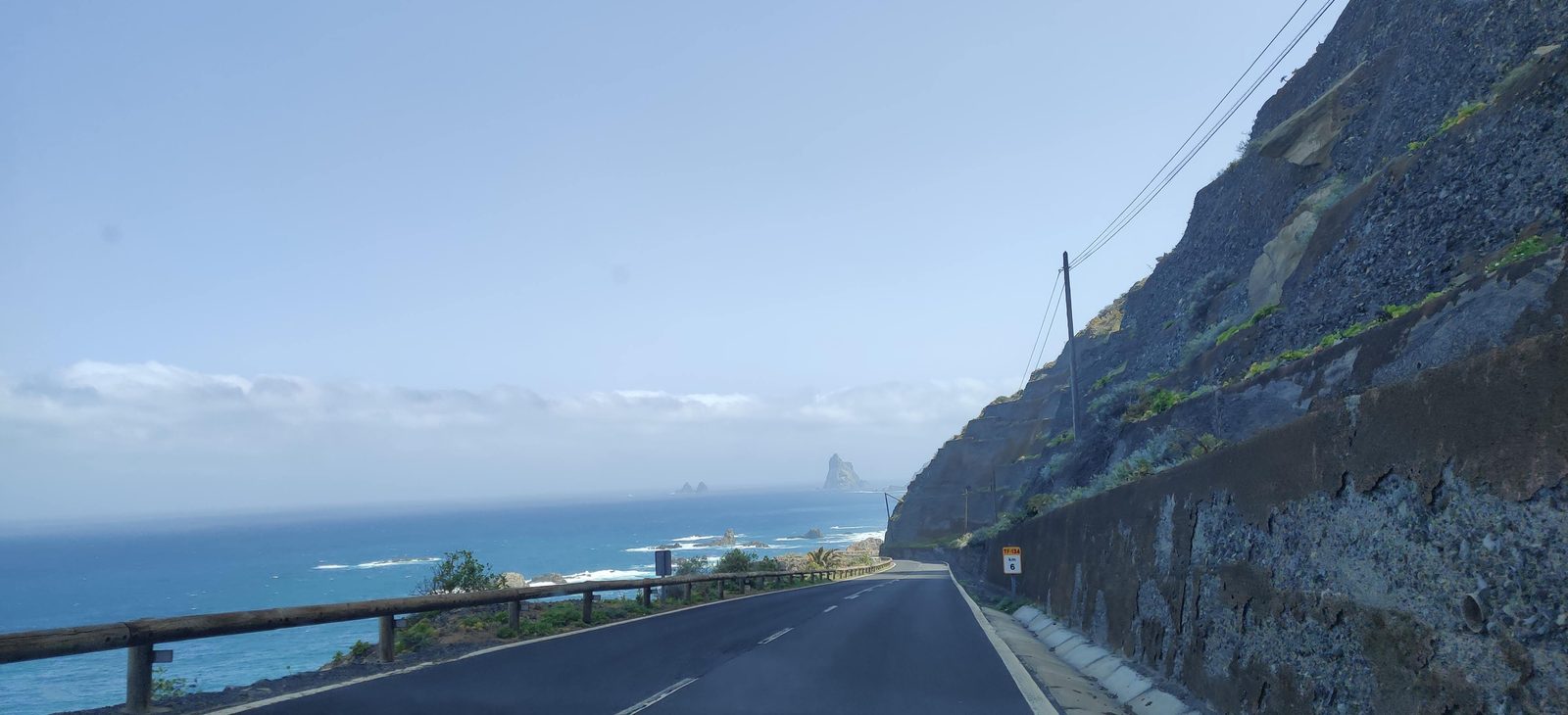
The coast road along the Anaga cliffs in our rental car, about 11:50 am.
Phones can switch to mainland Spain time. The Canaries run one hour behind, so check your clock before an early flight or a booked time slot.
After lunch we walked a ridge trail above the coast, with the road winding up the valley below and a village on the shore.
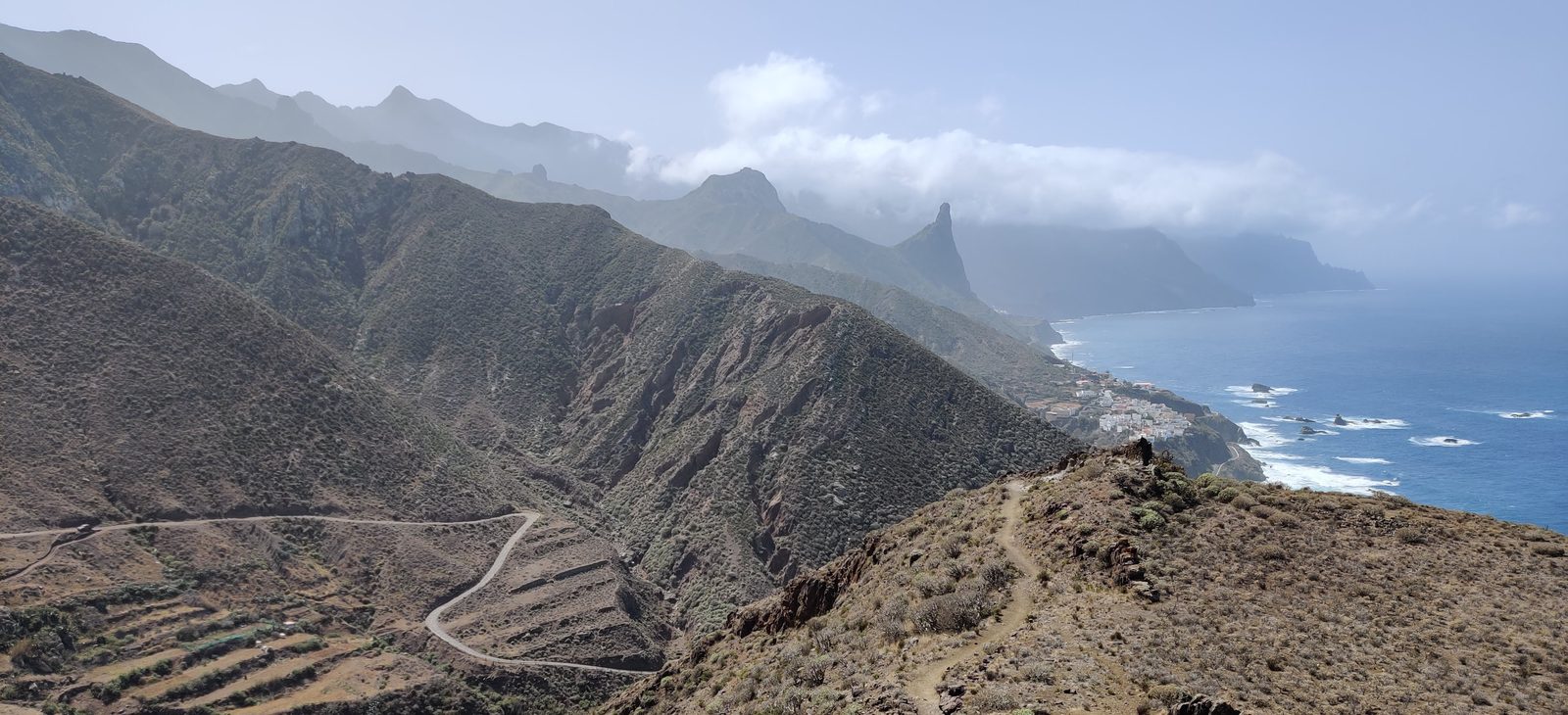
Out on the ridge trail at about 2:20 pm, looking along the north coast.
From there, a secluded black-sand beach was a short drive away. By about 2:45 pm I was in the water, and yes, it was warm enough to swim.
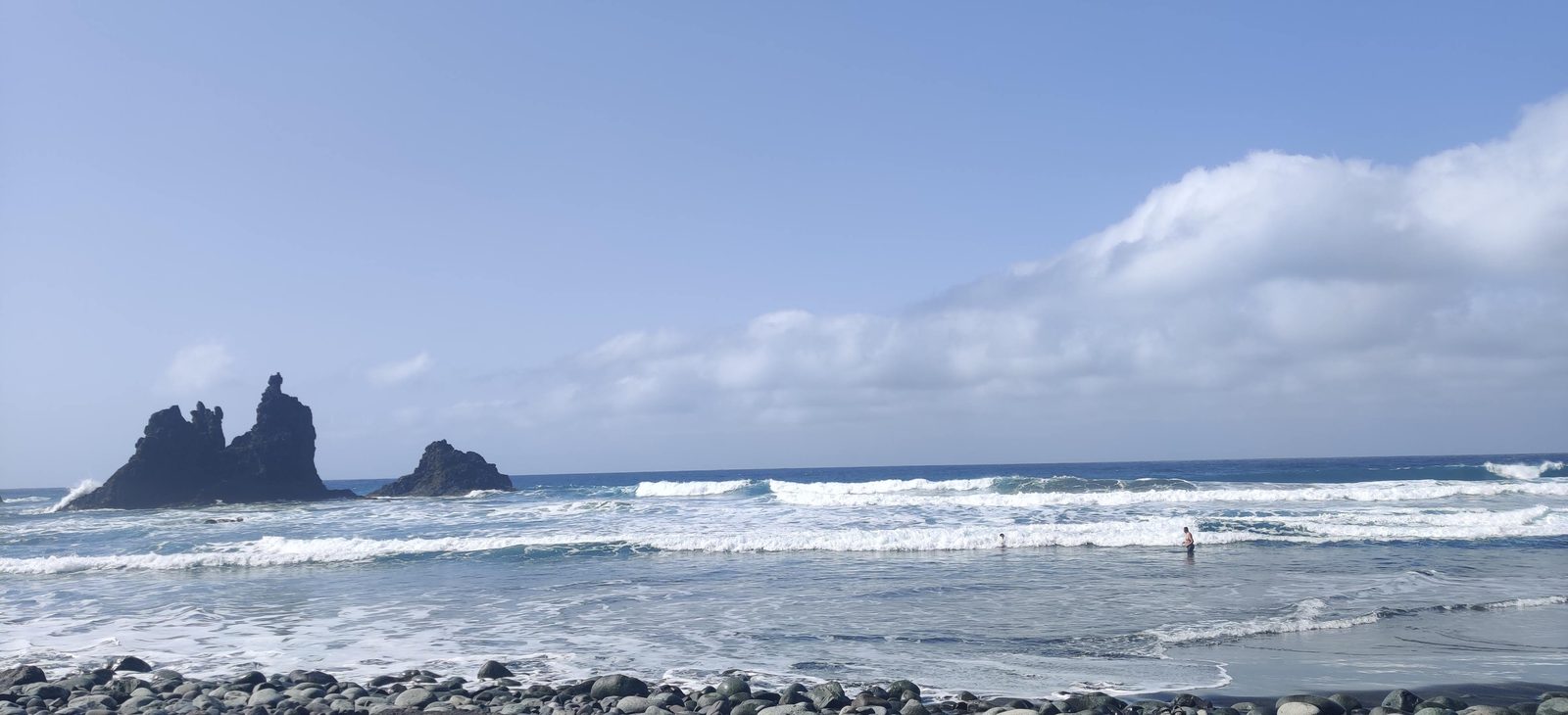
Swimming at a secluded beach in Anaga, about 2:45 pm. Look really closely and you can see me in the surf.
Some Anaga beaches close for rockfall risk, sometimes for years, and police fine people who ignore the closures. Check local signs before you go down.
This stretch of coast felt untouched. By about 3:40 pm the low sun was lighting up the whole shoreline.
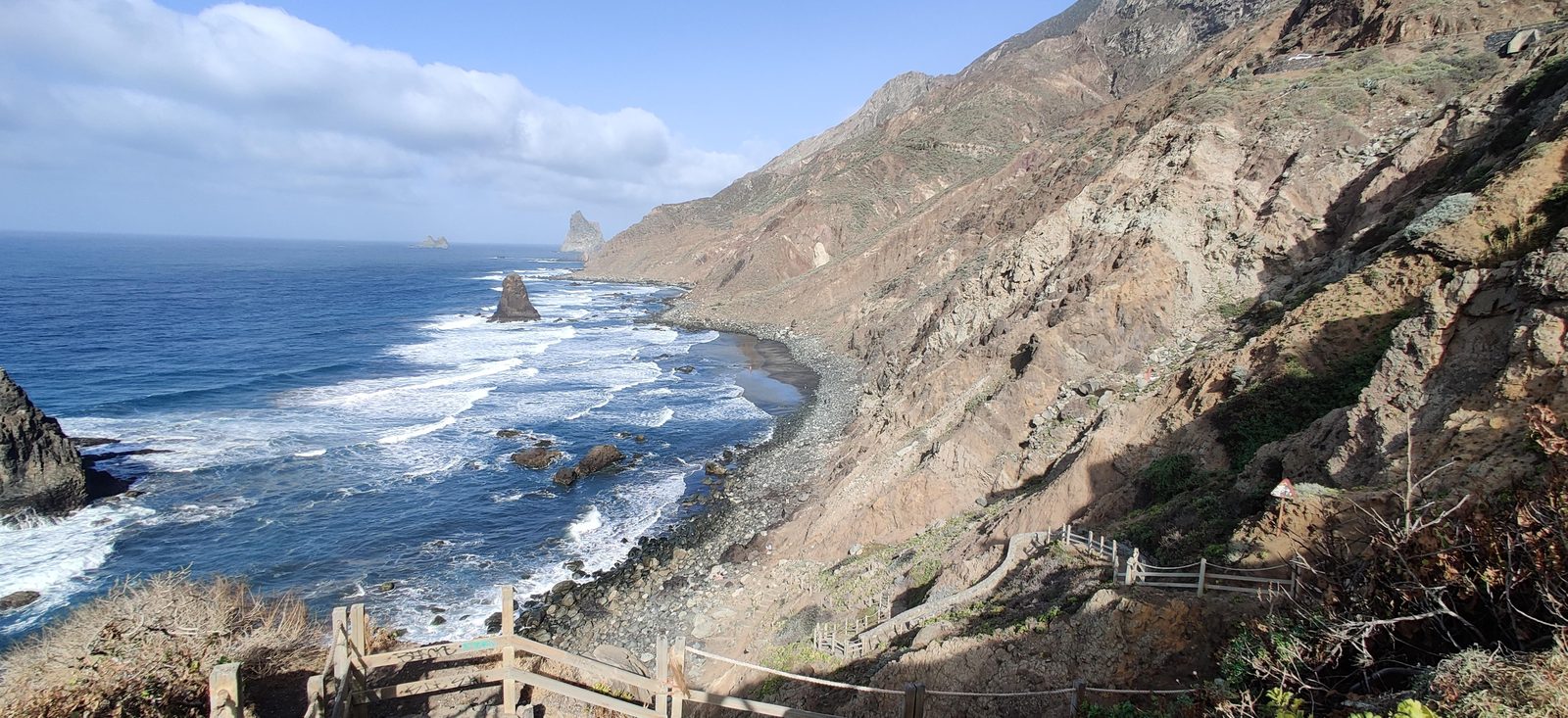
The path above the shore, about 3:40 pm.
Mount Teide
On day three we drove up through the forest toward Mount Teide. At about 10:10 am it came into view above the trees.
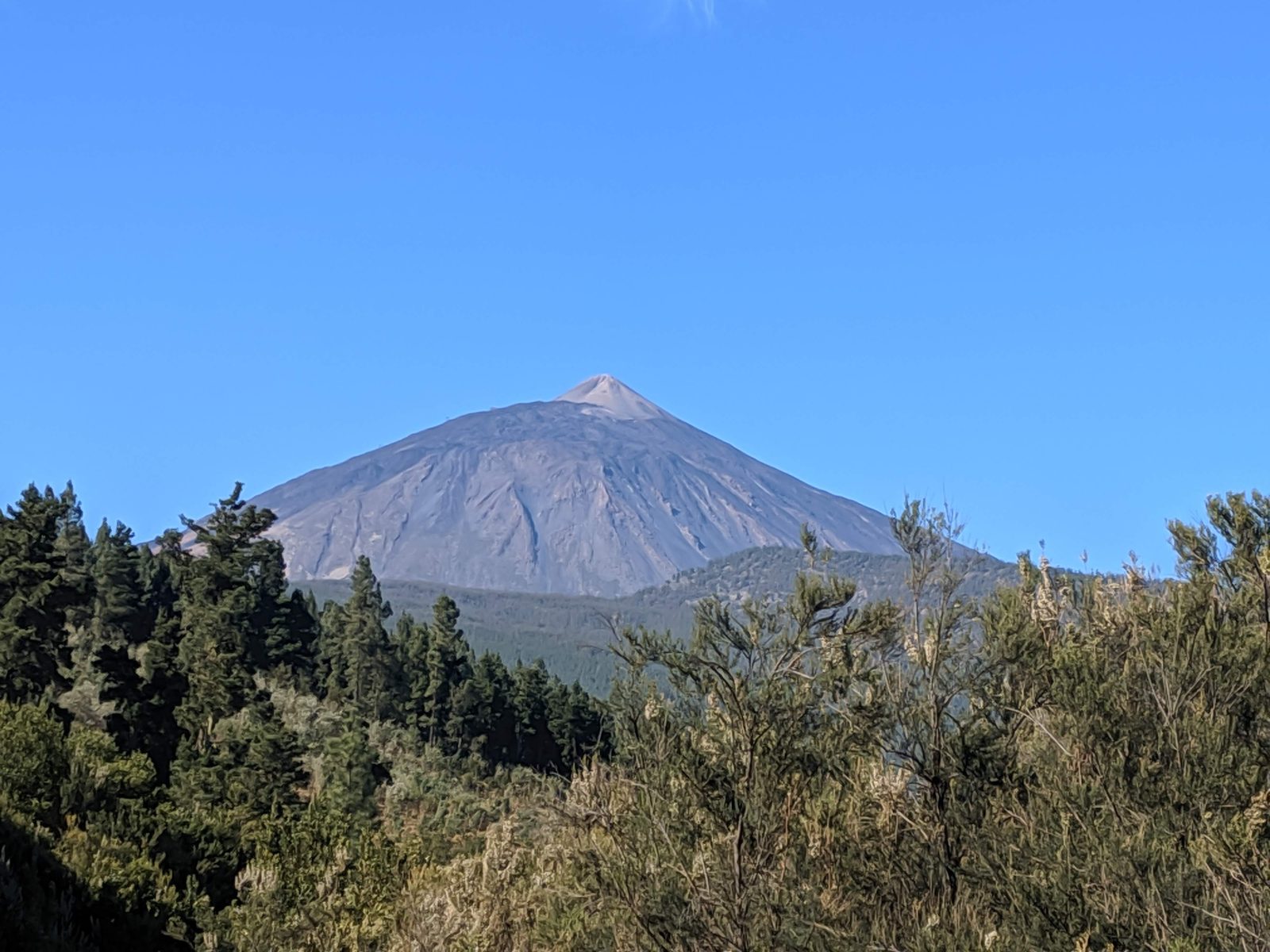
Mount Teide above the forest, about 10:10 am.
Teide is the highest point in Spain, at 3,718 metres, and the centre of Teide National Park, a UNESCO World Heritage Site since 2007.
It is also an active volcano. The last eruption was in 1909, from the El Chinyero vent on the island’s northwest rift.
Measured from the ocean floor, only two volcanoes are taller than Teide: Mauna Loa and Mauna Kea, both in Hawaii.
Later that morning we hiked Teide’s upper slopes, on the winding paths near La Rambleta, more than 3,500 metres up.
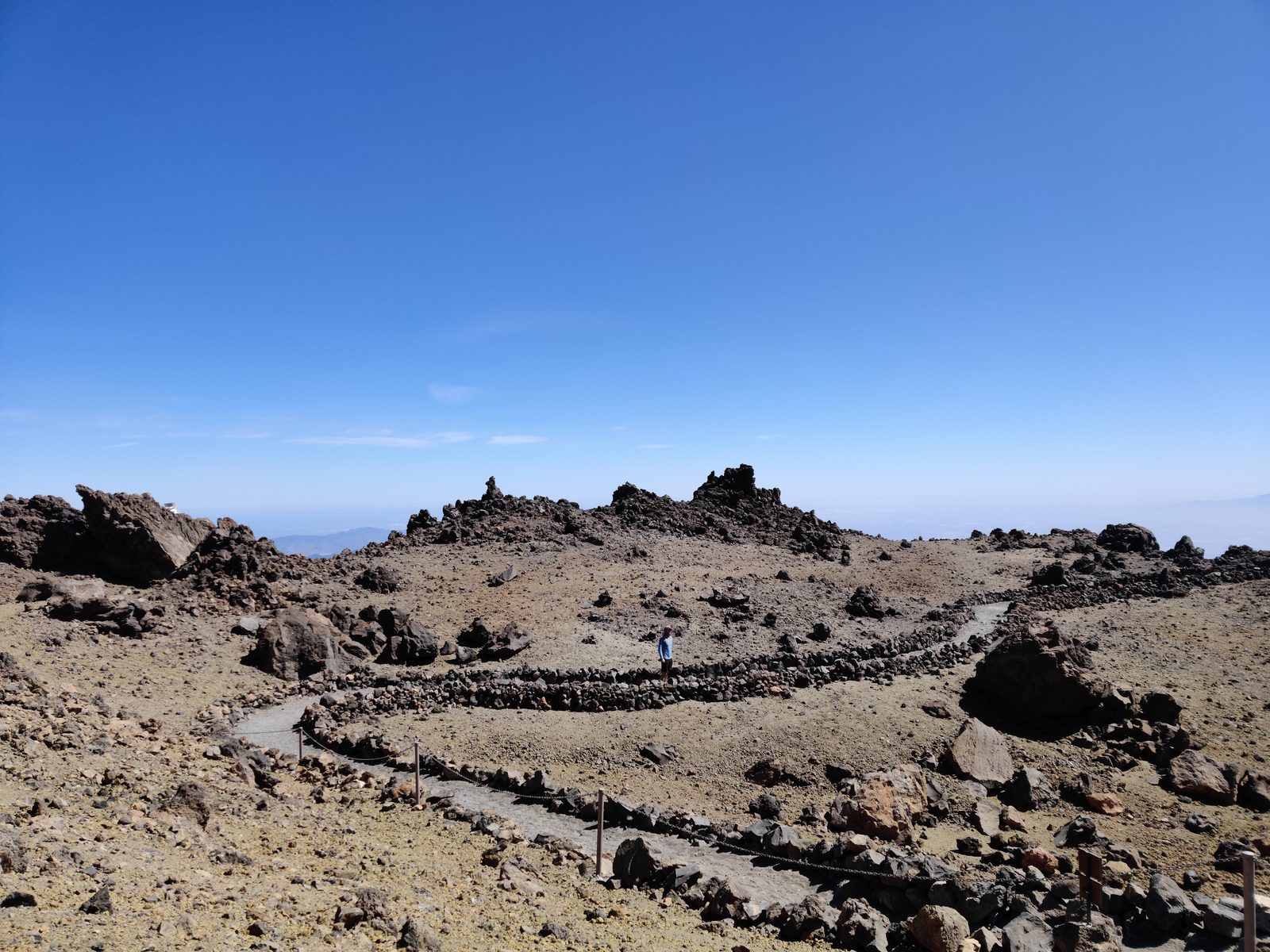
Hiking the paths near La Rambleta, more than 3,500 metres up.
If you would rather ride than hike, the Teide cable car climbs 1,199 metres from its base station to La Rambleta, at 3,555 metres. Three high trails start from the top station.
A cable car ticket does not include the summit trail. That needs a separate permit, booked in advance through Tenerife ON (as of October 2026, check before you go).
A day earlier I was swimming off a black-sand beach. Now we were in a lunar landscape, with the whole island below us.
Teide is the most visited national park in Spain and in Europe, with more than five million visitors in 2024, so go early.
Santa Cruz de Tenerife
Not every traveller wants a ridge hike. The capital, Santa Cruz de Tenerife, suits families, culture lovers and anyone after a slower pace, and Tenerife North airport is only about 10 km away.
Families can spend a beach day at Playa de Las Teresitas, a 1.3-kilometre beach sheltered by a breakwater. Its pale sand was shipped in from the Sahara, and it opened in 1973.
Garden lovers have the Palmetum, a 12-hectare botanical garden built on a former city rubbish dump, with more than 600 palm species.
For culture, the Museo de Naturaleza y Arqueología holds the largest collection on the Guanches, the island’s people before the Spanish conquest, including their mummies. On the waterfront, Santiago Calatrava’s Auditorio de Tenerife, opened in 2003, hosts concerts.
Food lovers can try papas arrugadas, small potatoes boiled in very salty water and served with mojo sauce, at the Mercado de Nuestra Señora de África, known locally as La Recova.
And the tram runs from the city to La Laguna, whose historic centre has been a UNESCO World Heritage Site since 1999, in about 35 minutes.
In 1987, about 240,000 people danced to Celia Cruz at Santa Cruz’s Carnival, a Guinness world record.
Carnival dates move every year, so check them before you book.
If you love Hawaii, Mexico or the Caribbean and want somewhere new for winter sun, this is where I would send you. Before you book, these are the three things I would sort first.
Book the Teide summit permit well ahead if you want the top, and bring a warm layer for 3,500 metres.
Rent a car for Anaga and Teide, but take the bus into Masca, where parking is capped at two hours.
Check beach status and local signs before you swim: some Anaga beaches close for rockfall.
Three days on Tenerife, three completely different landscapes, and sunshine on every one of them. Thank you for reading along.