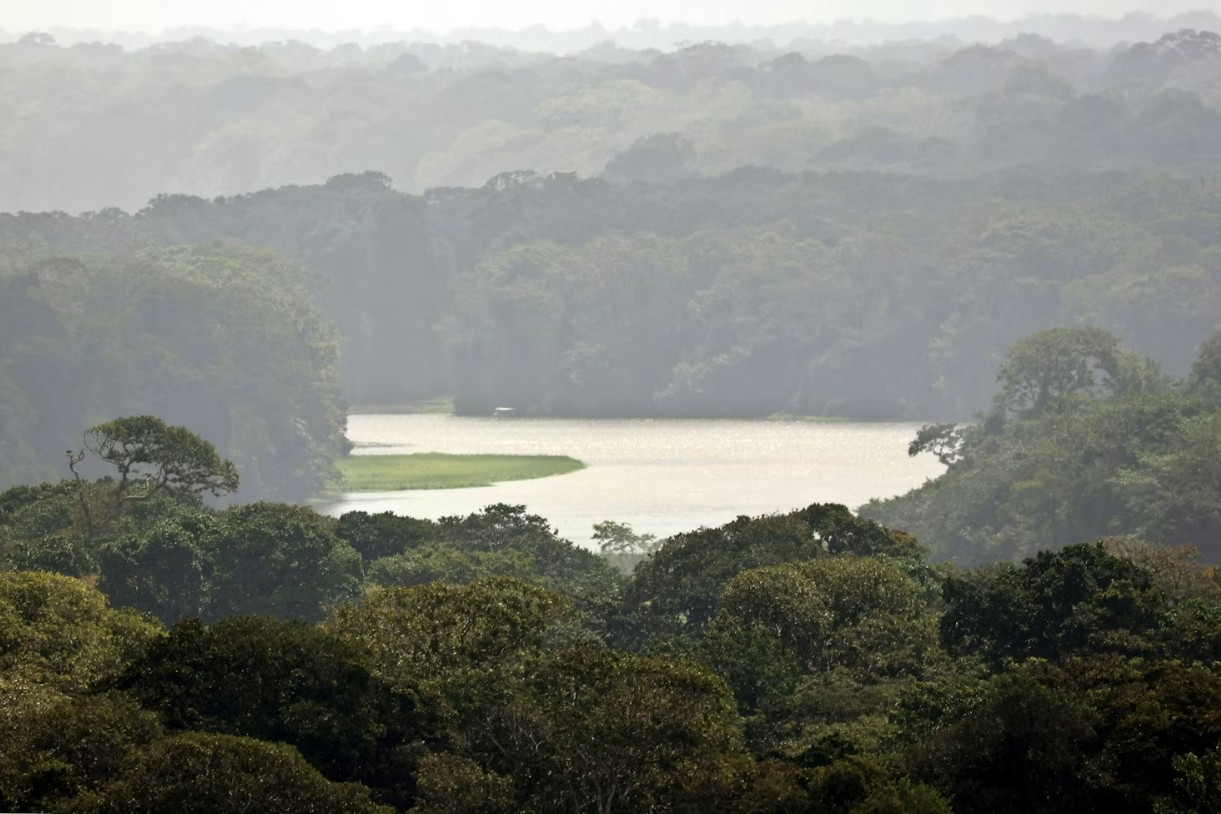
Costa Rica · Escorted Expedition · Experienced Hikers

Atlantic to Pacific
an eight-day traverse on foot.

From the black-sand canals of the Caribbean to the oak highlands of the Talamanca range: a genuine point-to-point trek across Costa Rica, walked with a small group, personally escorted, and built around the country's wild and Indigenous heart.

8 Days 171 km on foot 8-12 Hikers Experienced only From $1,979 CAD See the route ↓
The Expedition

One country, crossed
the old way, on foot.

This is not a resort holiday. Over eight days we walk a continuous line across Costa Rica, from the remote Caribbean village of Barra de Parismina, through Cabecar Indigenous territory and the coffee highlands, up into the cloud forest of the Talamanca mountains.

It follows the Camino de Costa Rica, a coast-to-coast route conceived to bring travellers off the tourist trail and into the rural communities that rarely see them. Distances are real, the terrain is humid and steep, and the rewards are the kind you only earn with your own two feet.

For experienced hikers only. Expect long days on uneven, often muddy ground, river crossings, heat and humidity, and sustained climbs. A good level of trail fitness is essential.

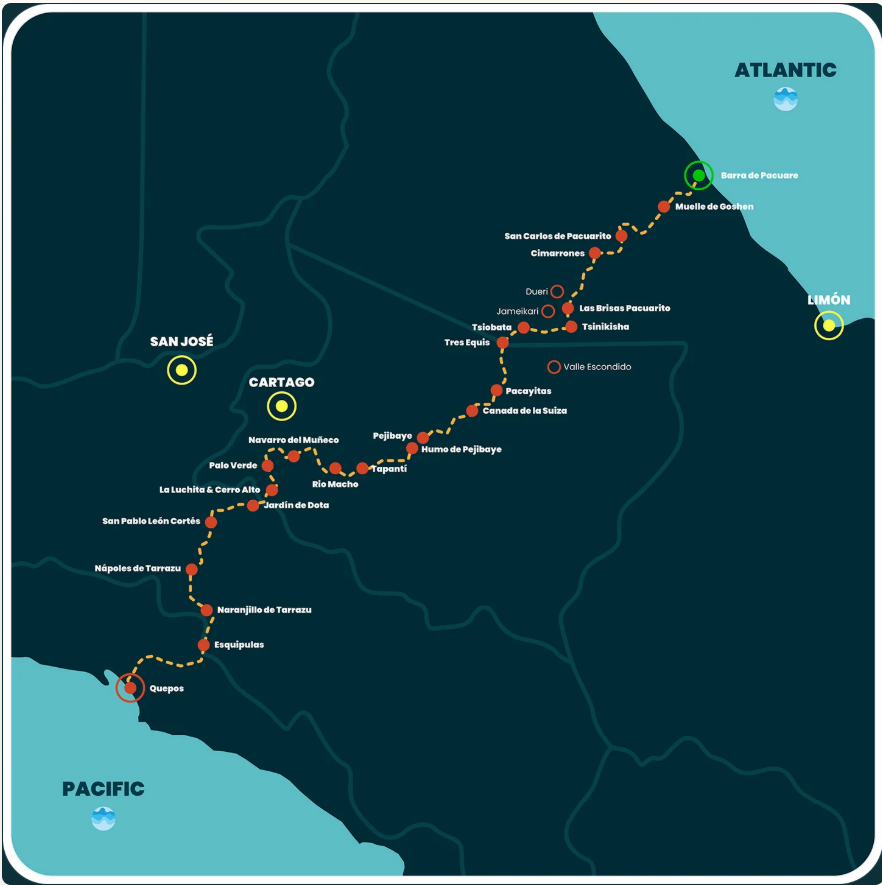
Route map of the Camino de Costa Rica from the Caribbean coast to the Pacific, marking the trail waypoints crossed on the traverse.
The Camino de Costa Rica, coast to coast. This expedition traces its wild eastern half, from the Caribbean lowlands into the Talamanca highlands.
8
Days on trail
8-12
Hikers per group
Caribbean to Highlands
Coast-to-mountain traverse
Escorted
By Kris plus a local partner
The Camino

From the Atlantic,
over the mountains.

The journey follows the Camino de Costa Rica, the celebrated coast-to-coast trekking route that links the Caribbean at Barra de Pacuare to the Pacific at Quepos, crossing the entire country on foot.

Our eight days trace its wild eastern half: the Caribbean lowlands and Cabecar territory, climbing through Tres Equis and the coffee country of the Orosi valley into the Talamanca highlands.

Caribbean trailhead: Barra de Parismina Cabecar reserve Orosi valley Talamanca highlands Highland finish: Esquipulas
The Route · Day by Day

Eight days, one unbroken line across the country.

Black-sand Caribbean beach on Costa Rica's eastern coast
01
Barra de Parismina to Cimarrones
14 km on footCabinCaribbean coastCanals & black sand

The traverse begins at the remote Caribbean village of Barra de Parismina. A boat threads the Tortuguero canals and the Rio Madre de Dios to Muelle de Goshen, where the mainland trail begins: black volcanic sand, turtle-nesting beaches and a first home-cooked rice-and-beans lunch before we reach Cimarrones.
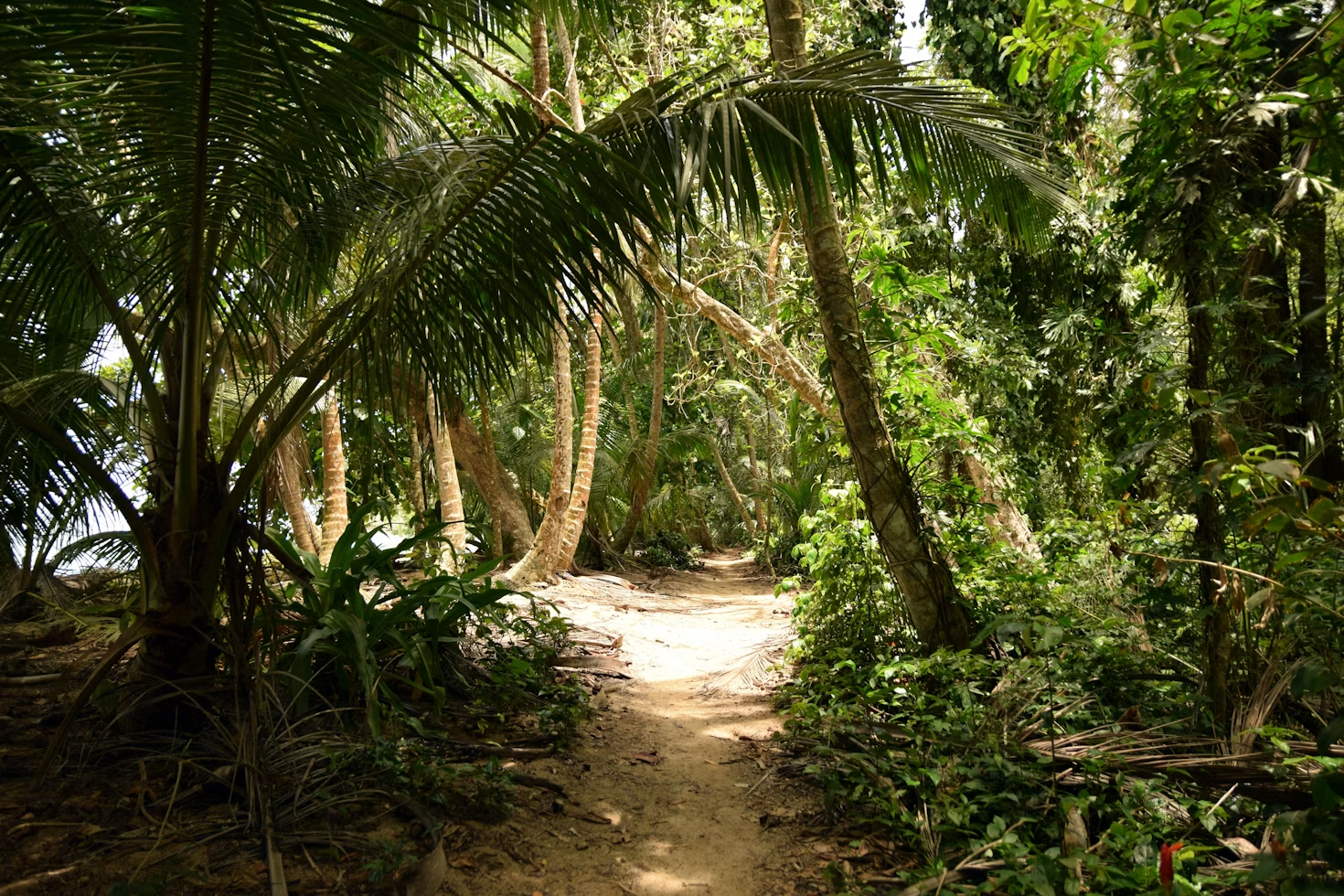
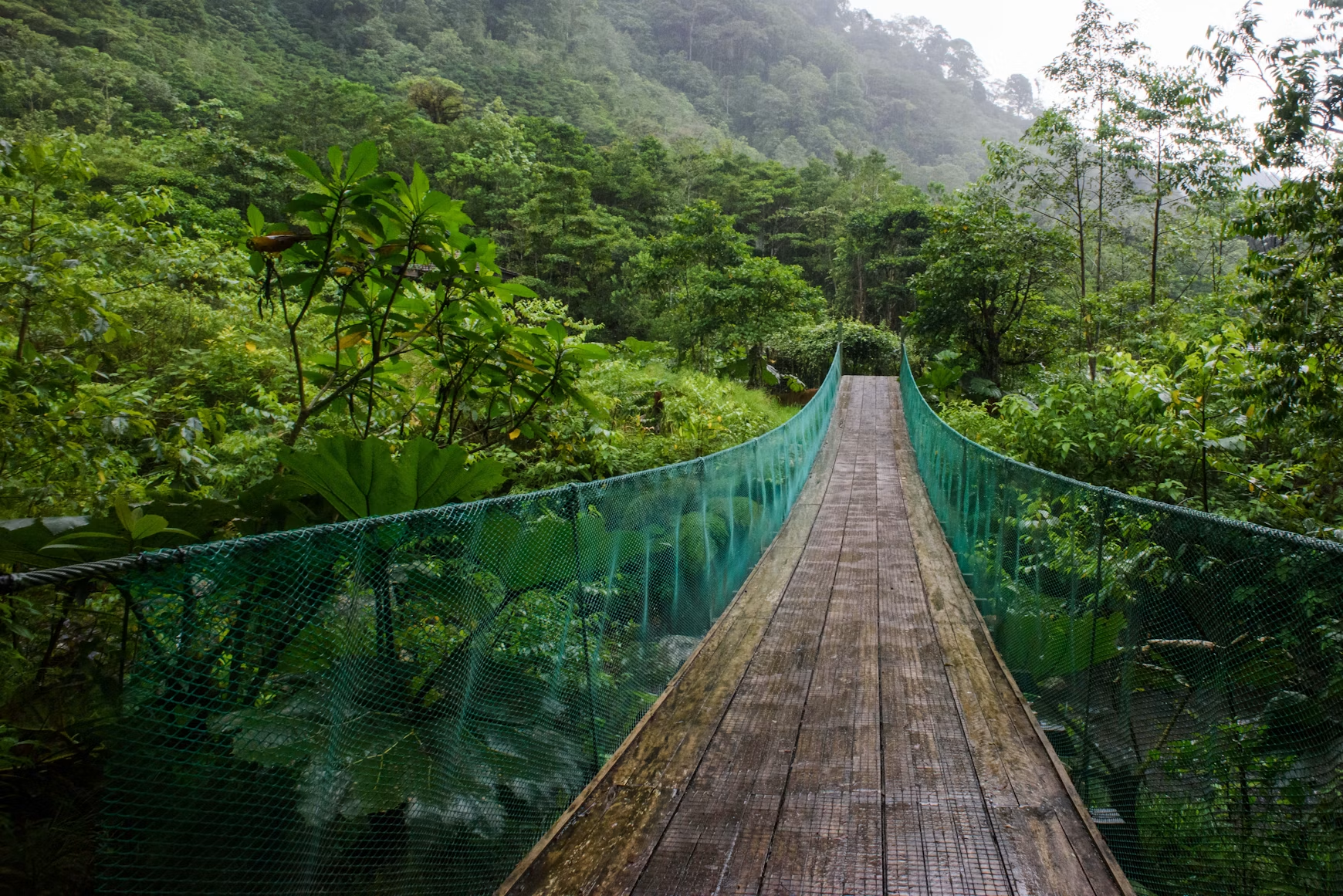
Tropical forest ascent above the Caribbean toward Las Brisas de Pacuarito.
02
Cimarrones to Las Brisas
18 km on footCabinTropical ascentCaribbean views

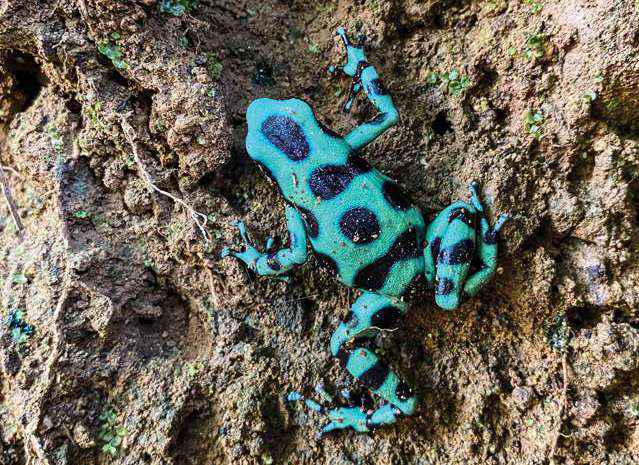
The first real climb, leaving the hot coastal plains behind for tropical forest. The Caribbean opens up at our backs and blue-jeans poison-dart frogs flash underfoot as we reach the edge of the Indigenous reserve at Las Brisas de Pacuarito.

No call centres. No coaches. Just the trail, a small group, and the two people who built the route walking it beside you.

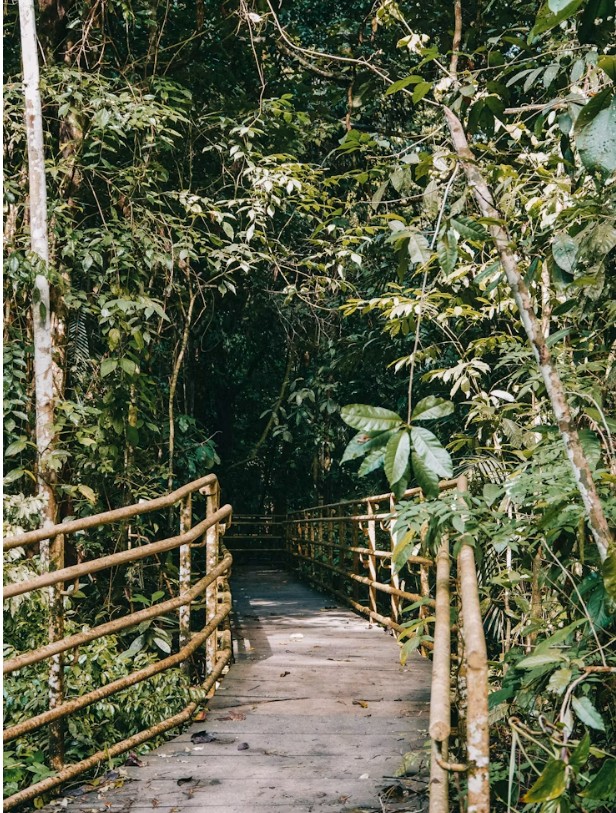
Forest trail through remote Costa Rican rainforest
03
Las Brisas to Tres Equis
20 km on footCampingCabecar reserveRemote rainforest

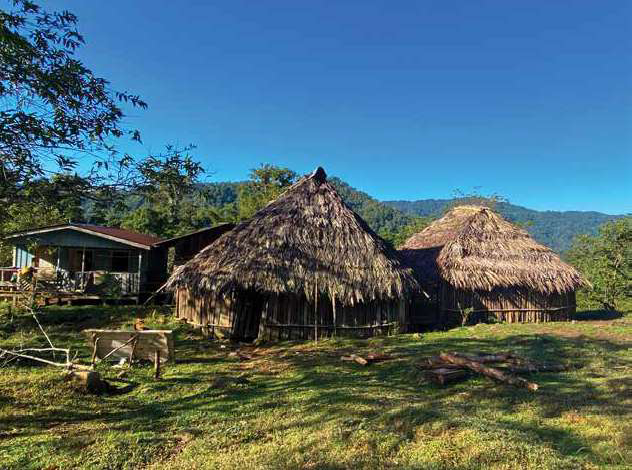
A demanding day traversing the Cabecar Nairi-Awari reserve high in the Talamanca foothills: remote, roadless terrain rich in nature and Indigenous heritage. We pass through the community of Tsinikicha, thatched palm homes and forest trails, before descending toward Tres Equis de Turrialba. This is the heart of why the route exists.

Green valley and farmland beneath the Talamanca mountains
04
Tres Equis to Sitio de Mata
26 km on footCabinRural TurrialbaTalamanca views

Gentler rural walking from Tres Equis de Turrialba through Pacayitas: cacao groves, orchards, sugar-cane and farmyards, with the Talamanca range filling the horizon. A day of village life and long mountain views toward Sitio de Mata.

Coffee plantation in the Costa Rican highlands
05
Pejibaye to Rio Macho
25 km on footHotelSugar-cane & coffeeRiver crossing

Through sugar-cane fields with the cone of Turrialba Volcano on the skyline, fording the Pejibaye River and climbing into coffee country. We follow the edges of the Orosi valley toward Rio Macho, where the coffee harvest and a historic hydro-electric scheme meet the forest.

At the Rio Macho lodge: laundry and natural hot-spring pools to ease the legs. Massage available for a small extra.

Misty cloud forest on a sustained mountain ascent
06
Rio Macho to Palo Verde
24 km on footCabinTapanti cloud forestSustained ascent

Skirting the bird-rich slopes of Tapanti National Park, we walk beside the historic Orosi aqueduct and climb steadily through dripping cloud forest. Hummingbirds, coatis and tanagers accompany the ascent to Palo Verde del Guarco, and a horizon that, on a clear afternoon, reaches back to the Caribbean.

Oak highland ridgeline near the Camino's high point
07
Palo Verde to El Empalme
14 km on footHotelOak highlandsCamino high point: 2,181 m

A long climb from Palo Verde del Guarco to the highest point of the whole Camino: El Empalme, at 2,181 m. Montane oak forest, paramo pasture and panoramic vistas across the cordillera, the Pacific glinting to the west on a clear afternoon, then woodsmoke and hot Tarrazu coffee at the mountain town.

Highland coffee country opening toward the Pacific watershed
08
La Esperanza to Esquipulas
30 km on footHotelLos Santos coffeePacific watershed

The final stage drops from La Esperanza into the Los Santos coffee highlands of Tarrazu: toucans and hummingbirds in the shade trees, the Pacific watershed opening ahead. A celebratory descent into Esquipulas closes the traverse.

Eight days, on foot, from the Caribbean to the threshold of the Pacific. A country crossed the old way.

Along the Way

What you'll encounter.

Rainforest wildlife along the trail
Wildlife

Up close with the wild

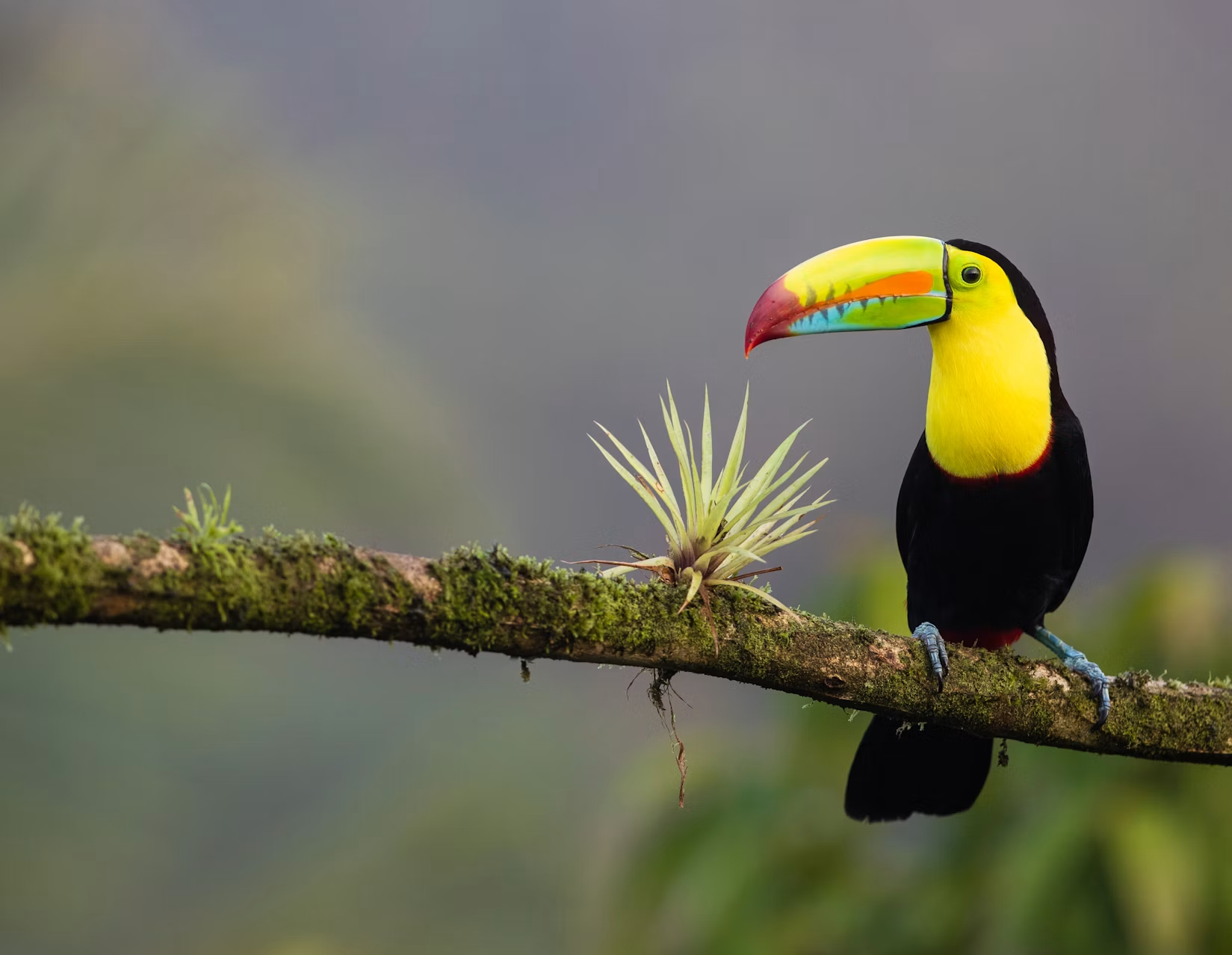
Green-and-black poison dart frogs, howler monkeys, toucans and morpho butterflies along forested, rarely-walked trails.

Indigenous community welcome in the Cabecar reserve
Culture

The Cabecar heartland

Time in Indigenous territory rarely open to travellers, welcomed by the communities the route was built to support.

Blooming coffee hillsides of the Orosi valley
Terroir

Highland coffee country

Walking the blooming coffee hillsides of the Orosi valley, from picked cherry to the cup at the end of the day.

The Investment
$1,979.18 CAD
Per person, taxes included.

Kris designs and arranges this expedition. The trek is operated by an established licensed Costa Rican operator, whom you contract and pay directly.

Request your group trek

Groups of 8-12 · limited departures · reviewed personally by Kris.

Everything on the trail, handled.

Private transportation

All ground transfers between trail sections and trailheads.

Transfers from San Jose

Transfers from San Jose to the starting point of the trek.

Expert local guide

A Costa Rican mountain guide from our partner operator, on every step.

All meals

Breakfast, trail lunch and dinner each day, including local home-hosted tables.

Accommodation

Seven nights across remote camping, rural cabins and highland hotels.

Luggage transport

Your bags moved between stages, so you hike with only a daypack.

Private-area entrance fees

Entrance fees to the private reserves and areas along the route.

Insurance & evacuation

Accident insurance and a full evacuation protocol.

Camino passport

Your official Camino de Costa Rica passport, stamped along the way.

Can be personally escorted by Kris Hehl, walking alongside a trusted Costa Rican supplier and mountain guide he partners with directly. The person who designed the journey is on the trail with you.